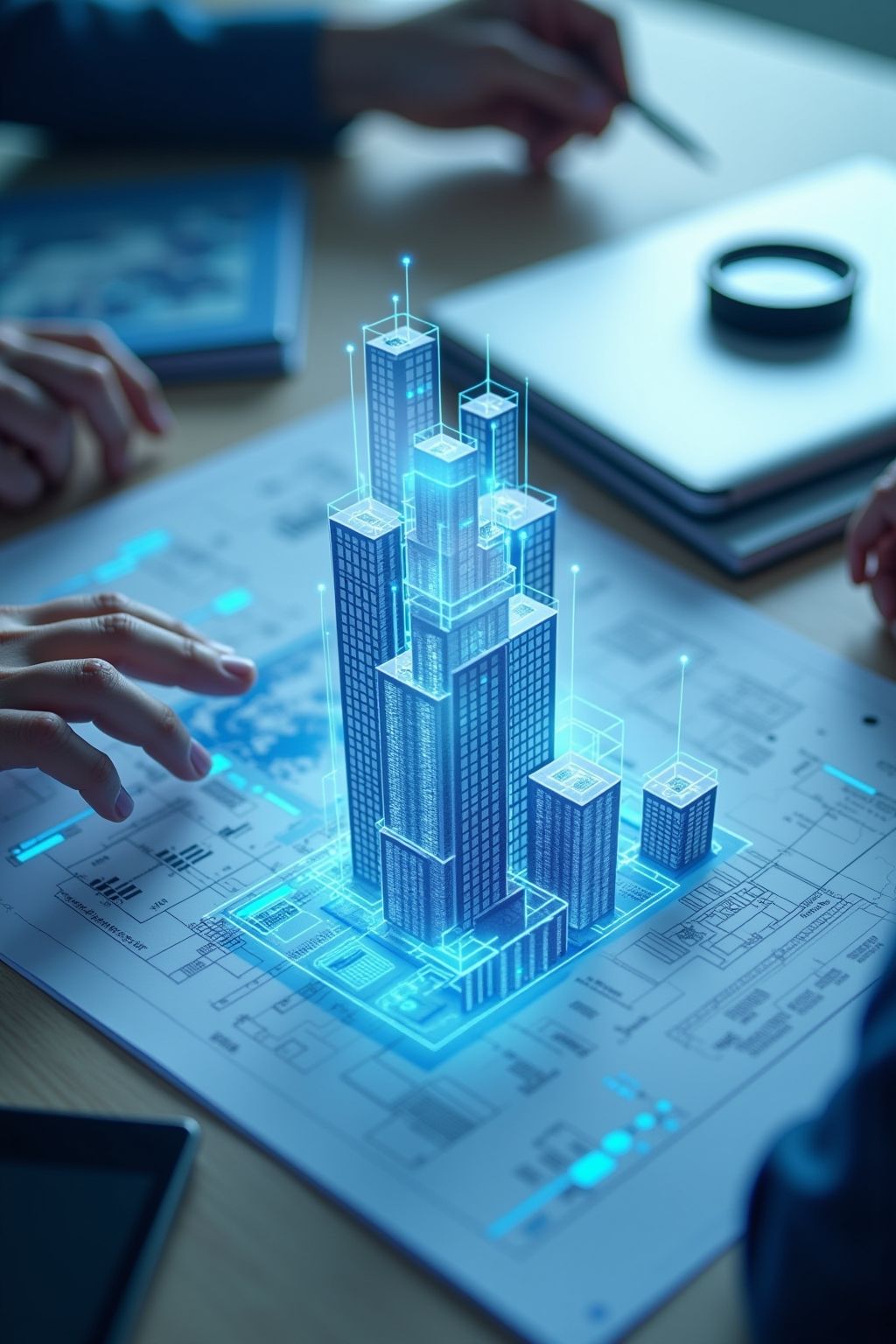
BIM Concept & Theory

By bluepillar_admin

4,8

1,158,467 students

Course Duration:Customizable

Course level:Beginner

BIM Concept & Theory

Building Information Modeling (BIM) is a concept and methodology aimed at improving the planning, design, construction, and management of buildings through a centralized digital model. Its main objective is to enhance collaboration among architects, engineers, and contractors by allowing them to work on a shared, data-rich platform where all project information is integrated.

Unlike traditional methods that rely on separate 2D drawings, BIM uses intelligent 3D models that contain not only geometric details but also information about materials, costs, schedules, and performance. The theory behind BIM is based on information-centric and parametric modeling, meaning that every building element is an interconnected object that automatically updates when changes are made.

This approach helps detect errors early, reduces construction conflicts, saves time and cost, and supports the entire lifecycle of a building—from design and construction to operation and maintenance—making the overall process more efficient, accurate, and sustainable.

Course Overview

A Building Information Modeling (BIM) course overview typically introduces students to both the fundamental concepts and practical applications of BIM in the construction industry. The course usually begins with an explanation of BIM principles, including how it differs from traditional 2D drafting and why it is important for modern construction projects.

Students learn about creating and managing 3D digital models that contain not just geometry but also detailed information about building components. The overview often includes training in BIM software, where learners develop skills in modeling, editing, and coordinating building elements. In addition, the course covers key topics such as clash detection, project collaboration, and the integration of time (4D) and cost (5D) into models. It may also introduce industry standards and workflows, helping students understand how different professionals work together using BIM.

Overall, the course is designed to equip learners with both theoretical knowledge and hands-on skills so they can apply BIM effectively in real-world construction projects.

Course Contents

Module 1: Introduction to BIM

  • Definition and concept of Building Information Modeling (BIM)
  • Differences between BIM and traditional 2D CAD
  • Importance of BIM in the construction industry
  • Overview of BIM applications and benefits

Module 2: BIM Fundamentals and Theory

  • Information-based and parametric modeling
  • Object-based modeling concepts
  • BIM dimensions (3D, 4D, 5D, etc.)
  • BIM lifecycle (design to facility management)

Module 3: BIM Software and Tools

  • Introduction to common BIM software (e.g., Revit, Navisworks)
  • Basic navigation and interface
  • Creating and editing 3D models
  • Managing project files and data

Module 4: 3D Modeling and Documentation

  • Developing architectural and structural models
  • Creating building components (walls, doors, windows, etc.)
  • Generating drawings, plans, and sections from models
  • Model accuracy and detailing

Module 5: Collaboration and Coordination

  • Multi-disciplinary collaboration in BIM
  • Model sharing and coordination workflows
  • Clash detection and conflict resolution
  • Communication among project stakeholders

Module 6: 4D and 5D BIM (Time & Cost)

  • Linking models to construction schedules (4D)
  • Cost estimation and quantity take-offs (5D)
  • Project planning and resource management

Module 7: BIM Standards and Implementation

  • BIM standards and guidelines (e.g., IFC)
  • Data exchange and interoperability
  • BIM execution planning (BEP)
  • Industry practices and case studies

Module 8: BIM for Lifecycle Management

  • Facility management using BIM
  • Maintenance and operational data
  • Sustainability and performance analysis
  • Future trends in BIM

BENEFITS

How this course benefits individuals:

COURSE INFORMATION

  • Understand the basic concepts and principles of Building Information Modeling (BIM)
  • Differentiate between BIM and traditional 2D drafting methods
  • Develop skills to create and manage 3D building models
  • Apply parametric and object-based modeling techniques
  • Use BIM software tools to design, edit, and document projects
  • Perform clash detection to identify and resolve design conflicts
  • Demonstrate ability to collaborate and coordinate with multiple disciplines
  • Apply BIM for project planning, including time (4D) and cost (5D) integration
  • Understand and follow BIM standards, workflows, and data management practices
  • Evaluate the role of BIM in improving efficiency, accuracy, and sustainability
  • Apply BIM knowledge in real-world construction and design scenarios

CAREER OPPORTUNITIES

  • BIM Modeler
    Creates detailed 3D models of buildings using BIM software. Works on architectural, structural, or MEP (mechanical, electrical, plumbing) components.
  • BIM Coordinator
    Manages and coordinates models from different disciplines. Performs clash detection and ensures all parts of the project align properly.
  • BIM Manager
    Oversees the entire BIM process within a company or project. Sets standards, manages teams, and ensures efficient BIM implementation.
  • Architectural / Structural Designer
    Uses BIM tools to design buildings and structures with accurate data and visualization.

Material Includes

F.A.Q

$18.99

$80.99 Discount 83% off

Benefits Obtained :

SHARE :

Gallery

All program categories